Hearty Lentils, Wild Rice, and Pinto Beans with Crispy Garlic Croutons

I’m in love with lentils for so many reasons! They’re easy to cook, healthy, and low-cost. For years I’ve enjoyed all kinds of rice, and endless varieties of beans, but for some reason I never experimented with lentils or took the time to learn about the different options. Thankfully, my curiosity was piqued while strolling the aisles of Jay International Foods in Saint Louis.

This wonderful international foods emporium features popular staples from around the world, with products conveniently organized by country. On a recent visit, I was struck by all of the different kinds of lentils (red, green, brown, black, yellow) and their presence in several spots throughout the store. Lentils are intrinsic to so many cuisines from Indian to Italian to Middle Eastern to African and beyond. They are also a mainstay in the United States, and especially popular in vegetarian cooking, because when combined with rice or another grain, they form a complete protein.

The recipe that I’m sharing with you today came together in a rather impromptu way, motivated by a 3/4-full tin of tomato paste (why do so many recipes call for a mere 1 tbsp of paste?), and some leftover wild rice and roasted sweet potatoes. This is my best guess at replicating the stew that I created, which is close enough to get you in the right direction. Just modify to taste, adding more stock (or water) if the lentils and rice are thicker than you like. This is a no-fail recipe, and it couldn’t be easier. You should feel free to add leftovers to the pot. After all, isn’t that what soup and stew-making are all about? I think so.

I’m especially pleased with the addition of lemon juice, balsamic vinegar, and brown sugar. The acid and the sweetness play beautifully against the tomato-y base. Finished with crispy garlic-y croutons (what a great use for stale bread), a dollop of labaneh or yogurt, and a sprinkle of chopped parsley, this dish is also a feast for the eyes.

INGREDIENTS

3 tablespoons olive oil

2 medium yellow onions, finely chopped

3 cloves of garlic, finely chopped

3 tbsp cumin

6oz tomato paste

15oz tomato sauce

62oz vegetable stock

2 C brown lentils

1 C wild rice

1 oz can of pinto beans

2 C sweet potatoes, cubed

1 bunch Lacinato kale roughly chopped

1 tbsp balsamic vinegar

1 tbsp lemon juice

2 tbsp brown sugar

salt and pepper to taste

1/4 loaf sandwich bread cut into large cubes (crouton size)

3 tbsp parmesan cheese

1/2 tsp garlic powder

Labaneh or plain Greek yogurt + chopped parsley for garnish

DIRECTIONS

In an 8-quart stockpot cook the chopped onions in the olive oil until they are soft and translucent. Add the chopped garlic and cook for another minute. Add the cumin, tomato paste, tomato sauce, and vegetable stock.

Bring to a boil. When liquid is boiling add rinsed lentils and rice, along with a drained can of pinto beans (or use dry pinto beans if preferred). Next add the cubed sweet potatoes and the kale. Reduce heat to simmer and cook with the lid on the pot until the lentils and rice are soft. Stir periodically as you check on the stew’s progress.

Once the lentils and rice are nearly done it’s time to add the lemon juice, balsamic vinegar, and brown sugar, along with salt and pepper to taste.

Heat the oven to 425° F. In a large bowl, toss cubed bread with a few tablespoons of olive oil, parmesan cheese, and garlic powder. Arrange on a baking sheet and cook until golden brown and crunchy, flipping them halfway through the cooking time to brown on both sides. I cooked them for about 10 minutes.

Serve garnished with the garlic croutons, a spoonful of labaneh or greek yogurt, chopped parsley, and another splash of balsamic vinegar if desired.

I’m looking forward to eating this hearty, nutritious dish throughout the week. I hope you find it as delicious and sustaining as I do.

Enjoy!

3 Hacks for Perfect Chocolate Chip Cookies

Sometimes I hesitate to blog about baking or cooking because there’s already such a wealth of great info and inspiration available. But other times, I feel motivated by small insights that radically improve what I’m making. These powerful little tricks are worth repeating. I enjoy doing my part to get the word out. So if you love thin chocolate chip cookies with crispy edges and soft centers, I’m here to share 3 hacks for making the world’s best chocolate chip cookies.

  1. Melt your butter
  2. Chill your dough for at least 2 hours before baking
  3. Put the racks in the top and lower thirds of your oven and rotate the pans from top to bottom and back to front at the halfway point of your bake time.

I got these game-changers, along with the recipe, from the queen of cookie baking, Alice Medrich.

Ingredients:

2-1/4 C All Purpose Flour

1 tsp baking soda

16 Tbsp unsalted butter

3/4 C granulated sugar

3/4 C packed brown sugar

1 tsp salt

2 large eggs

1 tsp vanilla extract

2 cups chocolate chips (I subbed in a bag of Health Bar pieces)

1 C chopped pecans or walnuts (optional)

Directions:

Set oven at 375F

Whisk together flour and baking soda and set aside

Cut butter into pieces and melt on stovetop

In a separate bowl, mix together the sugars. Stir in the melted butter. Using a hand mixer, beat in the salt, eggs, and vanilla until the ingredients are well mixed and glossy, about two minutes.

Stop the mixer. Continue the next step by hand: adding the flour mixture to the sugar mixture. Incorporate flour, but don’t over mix.

Add chips and nuts. I substituted Health Bar toffee pieces instead of chocolate chips. I love how the caramel in the Heath Bar pieces melts and makes the cookies extra crispy and delicious. I typically don’t add nuts. But if you love them, add them!

Chill dough for at least 2 hours. Medrich recommends overnight, but I get great results if I just wait 2 hours. Remove dough from the refrigerator and let it soften up a bit before baking. I use a large spoon or small ice cream scoop to drop the dough onto the baking sheet.

Bake for 10-12 minutes, rotating pans between shelves and turning them front to back at the half-way mark.

Remove from oven. Cool for about a minute before transferring with a wide spatula onto a sheet of parchment.

Voila! Happy baking. I hope you enjoy these.

Tasty Tofu Scramble

Scrambled tofu that tastes like scrambled eggs — only better? Sounds almost too good to be true. Happily, the recipe that I discovered last week is not only real, but easy to make. One block of tofu will make enough for four people — or a great breakfast four days in a row, which is how I enjoyed it. Scrambled tofu reheats perfectly in the microwave, so it’s also a great dish to make ahead.

One of the things that makes this so exciting is Kala Namak, a mineral-rich black salt from the Himalayas. It’s a go-to for vegans seeking egg flavor without the eggs, and a popular condiment in many Indian chutneys and snacks. Famous for its pungent, sulfurous aroma, the first time you get a whiff of it you may have doubts. Keep going! The terrible stink-bomb smell will dissipate upon cooking. It’s worth it. Your finished dish will be delicious.

As I often say, my favorite way to cook is to have time-intensive staples prepped and waiting in my fridge. (Favorites are caramelized onions, a pot of farro, and roasted vegetables.) With these basics at hand, it’s easy to freestyle on a whim. This scrambled tofu is now on that list of foundational necessities. It’s phenomenal dressed up with herbs, onions, and vegetables, as the mood and occasion inspires. It’s also great on toast, in a pita, rolled up in a tortilla, or all by its lonesome, without any carbs at all. The last time I made it, I added pan fried red peppers with lots of cumin and thick slices of avocado

As an “almost vegan” for just two months, I have a lot to learn. But one thing I knew from the start is that I don’t want to eat a lot of processed products that simulate meat, eggs, or dairy. I’d rather just celebrate the beauty and tastiness of plants, and learn how to cook them in exciting new ways. However, this dish really does taste amazingly like scrambled eggs. Flavored with brewer’s yeast, turmeric, garlic powder, onion powder, paprika, red pepper flakes, black pepper, salt, and Kala Namak, in a tahini and oat milk base that makes the tofu super creamy, I’d argue it’s even better.

It’s ironic. The best scrambled eggs I’ve ever had aren’t really eggs at all.

Next-Level Tofu

I’ve been thinking about the last thing that really spoke to me. Inspired me. Made me dig deep, but also made me laugh. And I tell you what, it was a couple of weekends ago during the Earth Day celebration in Forest Park here in Saint Louis. I’ve only been in my new city for a couple of months, so it was very energizing to be at a festival with such a large group of people. The crowd was diverse, as any group of people gathered in the middle of a city might be. But there was a sense of unification with everyone seemingly talking about some aspect of the environment — or at the very least, creating something beautiful for people to experience.

A total stranger gave me a few pouches of seeds: milkweed and heirloom zinnias. (If you’re interested in attracting Monarch butterflies to your garden, this will do the trick, he said.) I thought of his very kind act today when I prepared a new bed for planting them in honor of May Day. It seems like a perfect day to plant seeds that will bring butterflies. When he gave me the pouches of seeds, he also told me that the zinnias are from his 88-year-old neighbor’s plants. It made me feel good about the future of the flowers.

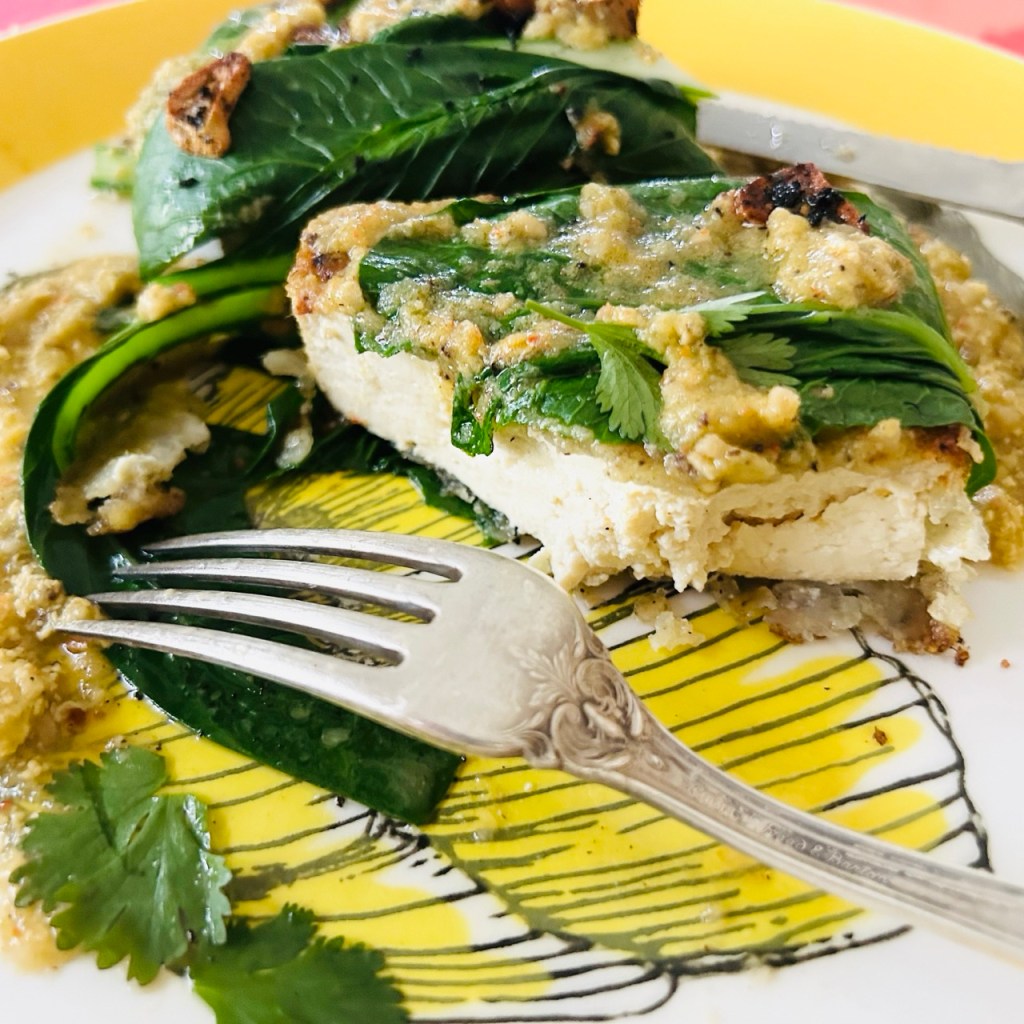
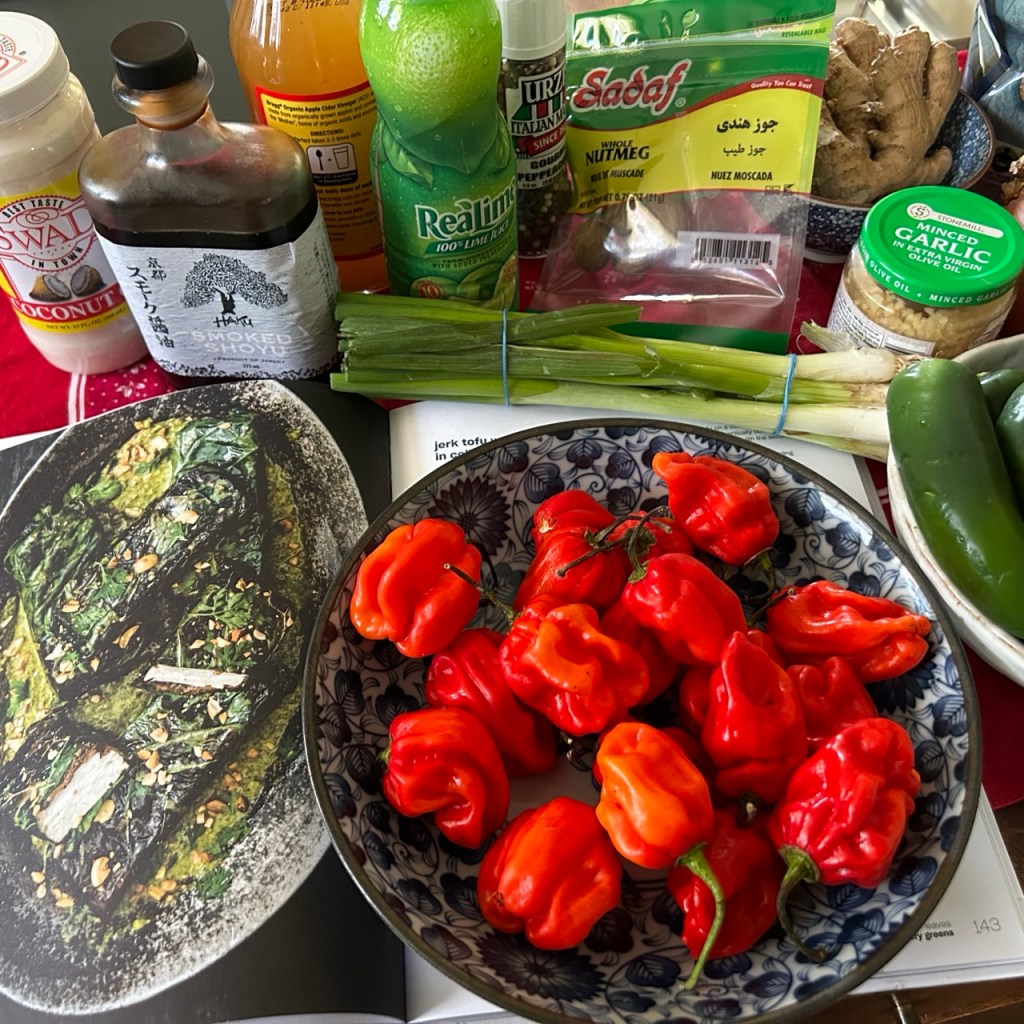
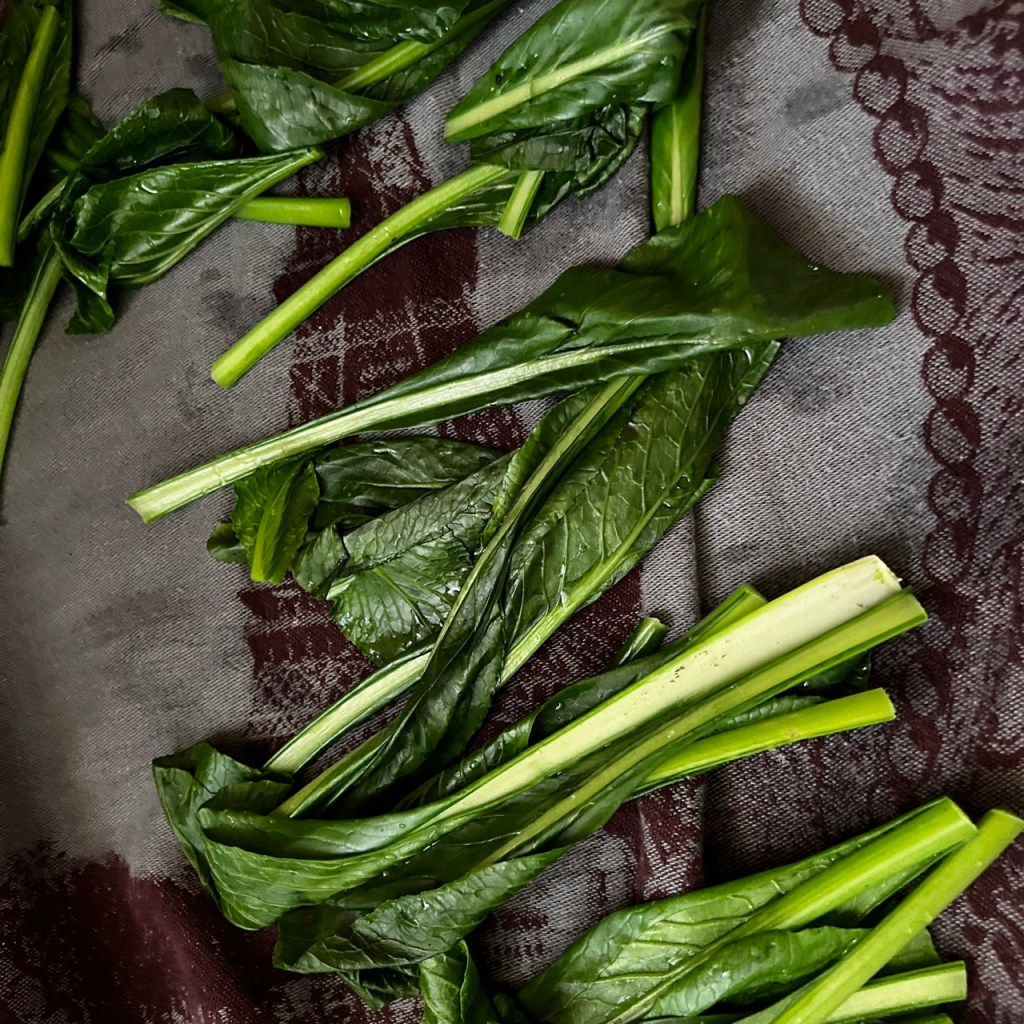
Spoiler Alert: I don’t think this post is going to have much to do with tofu, except to say that you should absolutely snag a copy of Bryant Terry’s Vegetable Kingdom and make the jerk tofu recipe on page 143. It would be criminal to provide the details here, (for so many reasons, not the least of which is copyright infringement). But beyond the obvious, it’s really more because you need to experience the whole damn book. The photos, the soundtrack, the beautiful writing, and the soul in every ingredient. Plus, chef doesn’t let you off easy. You’ve gotta marinate the tofu overnight in a homemade marinade. And make some garlic chips, and blanch some collard greens, and last but not least, make a cilantro sauce. It sounds harder than it is. It’s not hard. But you just can’t be in a hurry. You’ll need to give yourself over to cooking. Fry that garlic and meditate. Chop the peppers and reflect on the meaning of life. Cooking with Bryant Terry is simple yet profound.

See, that’s the real point of this here essay: peak experiences. In my view of late, the really exciting stuff is pretty darn simple. For example, grocery shopping. I used to dread it until I started to think about it in a new way. It used to be so gray and utilitarian. Now, I start by reading cookbooks. And then I go to wonderful international food stores and farmers markets.

My all-time favorite food writer is Nigel Slater because he writes in a very meandering fashion. You feel like you’re with him, puttering about in wooden clogs, snipping herbs from your garden and staring at the clouds. Eventually, he decides to make a stew. Impromptu style based on his mood, and pantry, and something poetic way down deep in his soul. He lifts you up with his free-spirited approach. After all of my reading, I usually haven’t settled on exact recipes, but I’m ready to make a list of spices, oils, grains, and nuts that I’m lacking — just in case. Usually, I focus in on at least one dish that I’m going to make.

In this case, it was the jerk tofu from Vegetable Kingdom. Partly, I was zeroing in on a recipe with tofu because of Michael Greger, M.D. I found this dude recently while googling how to optimize my microbiome. Next thing I know, I’m spiraling down a very exciting Internet rabbit hole, listening to a long playlist of science-based, heavily-researched videos on nutrition, diet, and health-optimization. After about 3 hours of YouTubing, I was ready to try a plant-based diet. And by that, I mean, try being a vegan. (Although, I quickly started calling it nearly-vegan, because I can’t seem to give up labneh on my flatbread, and parmesan on my pasta!) The spirit is willing, but the flesh is weak!

Currently, I’m on day two of this plant-based experiment. I must say, it feels pretty good. (In my stronger moments, I even think about giving up the labneh and the parmesan. But not yet, not yet.) At the moment, I’ll just say two things. First, I’m pondering how to indulge my love of food writing, but in a way that is uniquely me. And meaningful to me. There’s a plethora of gorgeous, food-styled content in the world. I mean, it’s staggering. I know because I spend a decent amount of time scrolling and saving it. The downside of all this food porn, is that it makes it very daunting to get in the game. What could I possibly add? What ingredient could possibly be novel? To be honest, I don’t know yet. But, I’m hoping that my ramblings will lead me down the garden path, Nigel Slater style.

My second thing has nothing, directly, to do with food. But I really must rant. I am so discouraged by the American front lawn. It’s such a thing. And to me, a baffling thing. Everyone on my street seems to have a lawn that is being “treated.” I keep wondering: treated for what? These guys wearing ghostbuster backpacks roll up and spray some mysterious thing on the lawns being treated. I don’t feel good about this. But the polite, Midwestern-born part of me doesn’t want to be rude or strident. I really am not comfortable getting up on a soapbox. I feel a bit shy. But at the same time, I feel a lot of despair over this lawn-treatment phenomenon. I don’t know how our notion of beauty (aka: uniformity) got so messed up. Like the guy with the pouches of seeds at Earth Day, I want to hand out inspiration to my neighbors. I want to share knowledge. I want to show people that there’s a different path.

I say all of this with humility. I used to be such an eye-rolling skeptic. I mean, that’s a story for another day. But there was a time when I just wasn’t that interested in the perils of monoculture, or composting, or eating my organic greens. It pains me to think that I wasn’t open to the obvious. And now, it’s baffling looking back.

So I’m going to mediate while frying my garlic chips. What can I do? My first thought is to lead by example. Lectures never seem to work. Create something beautiful on the block that moves people. Call in the butterflies. Turn a lawn into a prairie. I know it’s not going to happen overnight, but I have faith that even little acts of kindness and beauty can make a difference. Stay tuned.

Fried Not-So-Green Tomatoes + Smoked Shoyu

My absolute favorite thing on a leisurely Sunday morning is to challenge myself to use up vegetables and other items that have lingered too long on my counter or in the crisper drawer. This feels especially fun if the cooking is impromptu, from-the-hip, and possibly inspired by something I’ve read about or seen, but never tried. Today’s experiments include frying up a big beautiful tomato that I bought nearly three weeks ago at the Soulard Market shortly after moving to St. Louis.

When I bought the tomato it was vivid green. Seeing it in the market stall, my mind immediately flashed to Fanny Flagg’s Fried Green Tomatoes at the Whistle Stop Cafe. I’d never made fried green tomatoes, nor read the book, but I vowed to do both. In classic fashion, time slipped away. The book sits unread, and the tomato eventually turned red. Happily, it remained firm. So, today was the day that it finally found its way to the frying pan.

How to Cook Fried Green (Or Not-So-Green) Tomatoes

  • 2-3 Green Tomatoes
  • 2 beaten eggs
  • 1C Panko (Bread Crumbs)
  • 1/8C Olive Oil
  • Black Pepper
  • Smoked Shoyu

Coat a cast iron skillet with a thin layer of olive oil. As I was prepping my tomatoes, I heated the oiled skillet on a medium flame. (While many recipes recommend as much as a 1/2 cup of vegetable oil, I found that much less gave me a good result.)

Cut the tomatoes in thick slices, dredge in egg, and coat in breadcrumbs. Place gently in the hot oil and cook for about two minutes on each side, or until a crispy crust forms. Add black pepper to taste. (Since I’m serving these with smoked shoyu, which is salty, I’m holding off on additional salt.)

Serve with a scoop of cottage cheese, some chopped flat-leaf parsley or cilantro, and a dash of smoked shoyu. The Japanese oak used to craft this soy sauce lends a robust, umami-rich smoked flavor.

My first thought when I took a bite of the hot, crunchy tomato with a forkful of the creamy, full-fat cottage cheese (infused with umami goodness) was that it was strangely reminiscent of the flavor of a bacon-heavy BLT. Since I no longer eat meat, unless I’m a guest at someone’s home, I haven’t made a BLT in a few years. But, the memory is fresh in my mind. The crispy breaded tomatoes with shoyu, which so powerfully conjured bacon, was surprising, and incredibly delicious.

After finishing my lunch, I decided to research other fried green tomato recipes. Most seemed to coat their tomato slices in flour, then egg, followed by a mix of cornmeal and flour. I’ll try that method next time, but was very happy using Panko. I decided on a side of cottage cheese because I’ve been looking for ways to get more protein in every meal, and a half-scoop has 11 grams.

Easy, quick, and yummy, this is a treat that I predict will be on constant repeat in my kitchen. Maybe next time I’ll even try it before the tomatoes change color.

Spanish-y Soup

As a novice home cook, the thing that really makes it fun for me is see what I can do with random ingredients in my fridge (especially vegetables that are crying out to be used before they go bad).

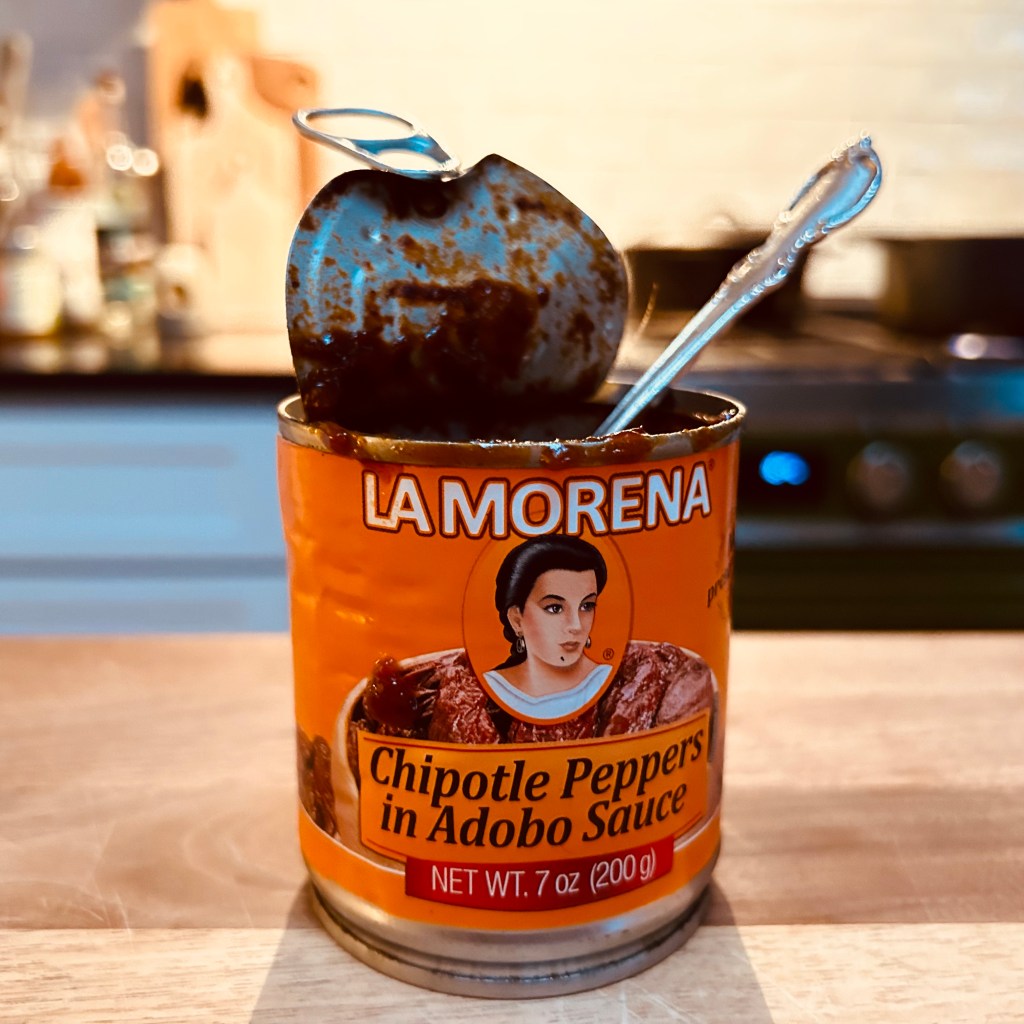
This week my culinary adventure began with a nearly-full can of chipotle peppers in adobo sauce. I had recently opened the tin to make a fabulous cilantro-lime salad dressing (which is a post for another day). I felt a bit stumped as to what I was going to do with the rest of the peppers, until I had a vision of adding them to a soup base with beef broth, coconut milk, and lime juice.

The chipotle peppers have a wonderful smoky quality and I was excited to see what direction the soup might take once I got going and made use of a fun lineup of leftover items. I was hoping this would be like a scene from Like Water for Chocolate where I let my intuition be my guide to some culinary magic.

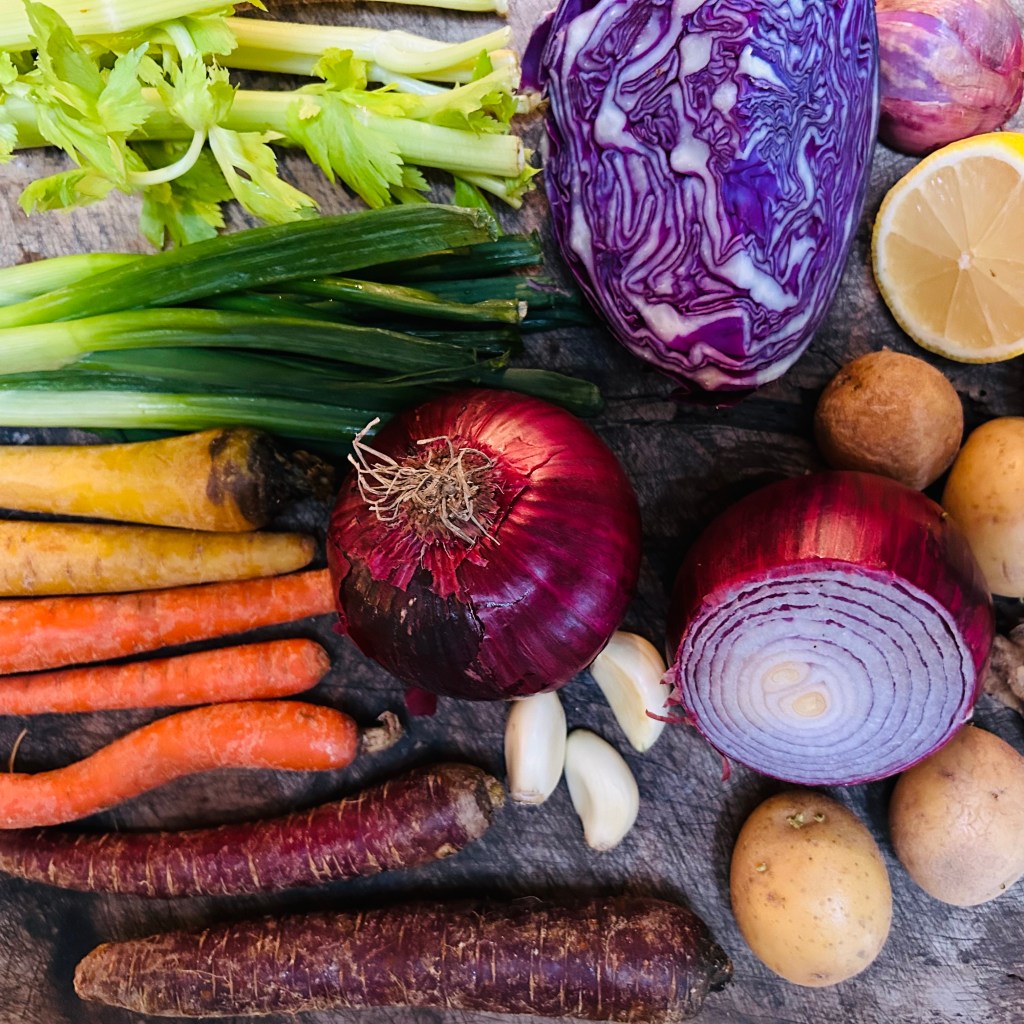
I started by cutting up a couple of carrots, half a purple onion, two cloves of garlic, a shallot, and two stalks of celery. I sautéed these in my soup pot in a generous glug of olive oil until they were softened with a bit of color.

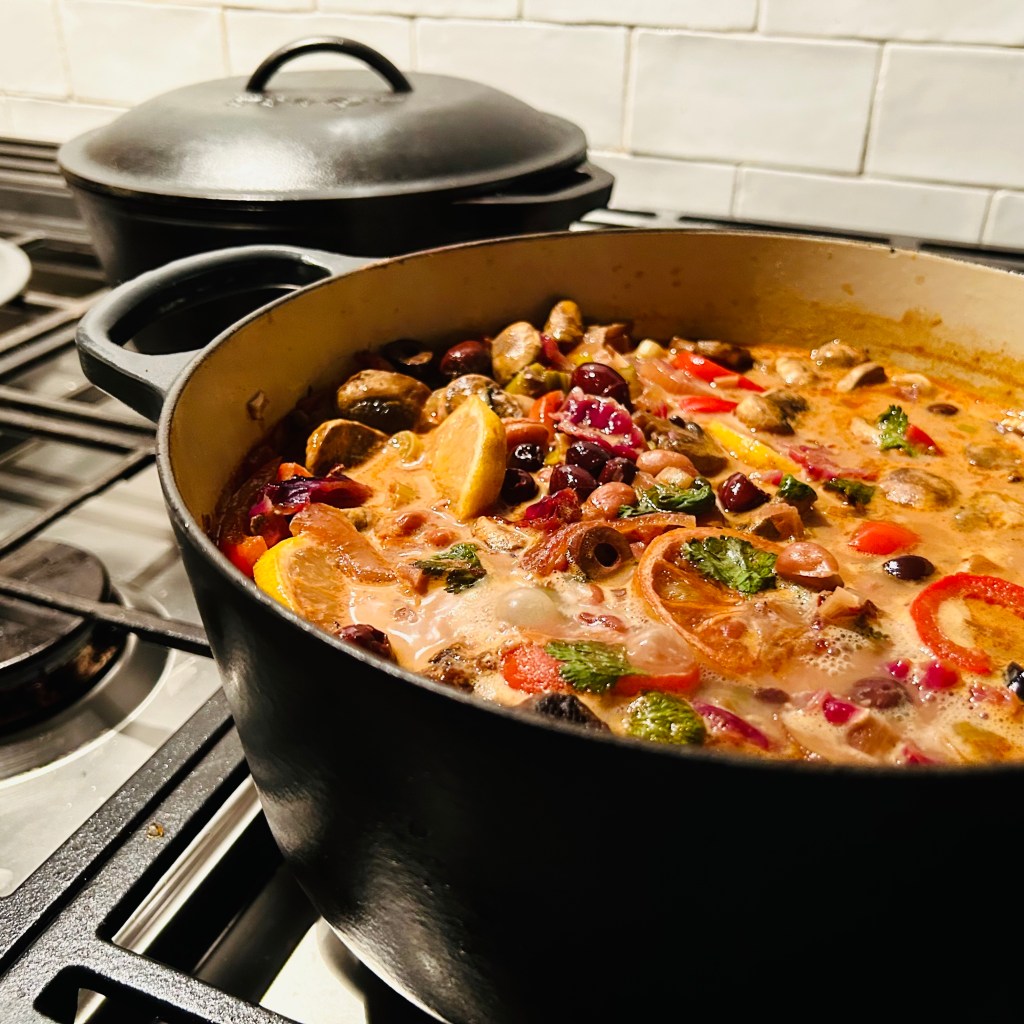
Next, I added 3/4 of a carton of beef broth, a tin of coconut milk, and the adobo peppers. As the broth was bubbling away, I chopped my vegetables and added them to the mix: mushrooms, red pepper, green onions, jalapeños, potatoes, and purple cabbage.

The best part was exploring all of the little storage containers and bottles in my fridge. I had half a bottle of capers, black pitted olives, green olives, three sardines, and some caramelized white onions that I’d cooked up a few days earlier. Oh, and a can of white beans from the pantry.

Needless to say, all of the bits and bobs were pointing toward a wonderful Spanish style of soup. Not exactly a bouillabaisse, but very much in that neighborhood. After adding the capers and the olives, I tasted the broth and I knew instantly that I was on the right track. The broth was rich and smoky, with lovely salty/briny notes from the sardines and the capers. I debated whether or not I wanted to add a can or two of diced tomatoes, but I didn’t want to mess up the flavor profile that I had accidentally achieved. I decided that tomatoes might make the broth too bright and citrusy, and I liked how savory it tasted.

Chipotle peppers in adobo sauce are quite spicy. The broth still had a high level of heat, so I added a small can of coconut cream to bring down the fire just a touch. Another taste of the broth and I felt it was very nearly perfect. Two tablespoons of lime juice, three cross-sections of lemon, and salt and pepper to taste were my final additions. The citrus added a perfect touch of brightness, but not overly as I had feared the diced tomatoes might. I put the lid on the pot and let it simmer for a few hours.

Flash forward to today when I enjoyed a big bowl of my soup garnished with fresh cilantro. I was so happy that I’d added the lemons. The fleshy fruit had cooked off of the rind and become integrated in the broth. The rinds remained and were surprisingly delicious! The only thing missing was a crusty baguette. Happily, I made a big pot, so there will be plenty of opportunities to dip my bread into my bowl. One thing I am considering is whether I should run to the market for a small amount of white fish. This soup cries out for fish. But sometimes, it’s best not to tempt the fates. Especially not when they’ve given you a taste of magic.

Ingredients:

  • Two carrots
  • Two stalks of celery
  • 1/2 purple onion
  • 2 cloves of garlic
  • 1 scallion
  • 3/4 box of beef broth
  • Small tin of chipotle peppers in adobo sauce
  • 1 tin of coconut milk
  • Small tin of coconut cream
  • 8 small yellow potatoes
  • 1 cup of sliced mushrooms
  • 3 green onions (the white parts, diced)
  • 1/2 large red pepper diced
  • 1/2 cup caramelized white onions
  • 1/4 medium purple cabbage finely diced
  • 1 jalapeño finely diced
  • 1/4 C green olives, pitted and diced
  • 1/4 C black olives, pitted and diced
  • 1/4 C capers
  • Tin of white beans
  • 3 lemon rounds
  • Cilantro
  • Salt
  • Pepper